BRAIN GYM® IN THE CLASSROOM
Better Learning.
Focused Students.
Restore calm and concentration with 10–15 minutes of purposeful, specific movements designed to naturally re-center attention without breaking academic momentum.
Boost focus, calm and engagement for happier students, happier teachers and a thriving classroom.
THE REALITY
When the Day
Feels Like a Battle...
The Overwhelmed Classroom
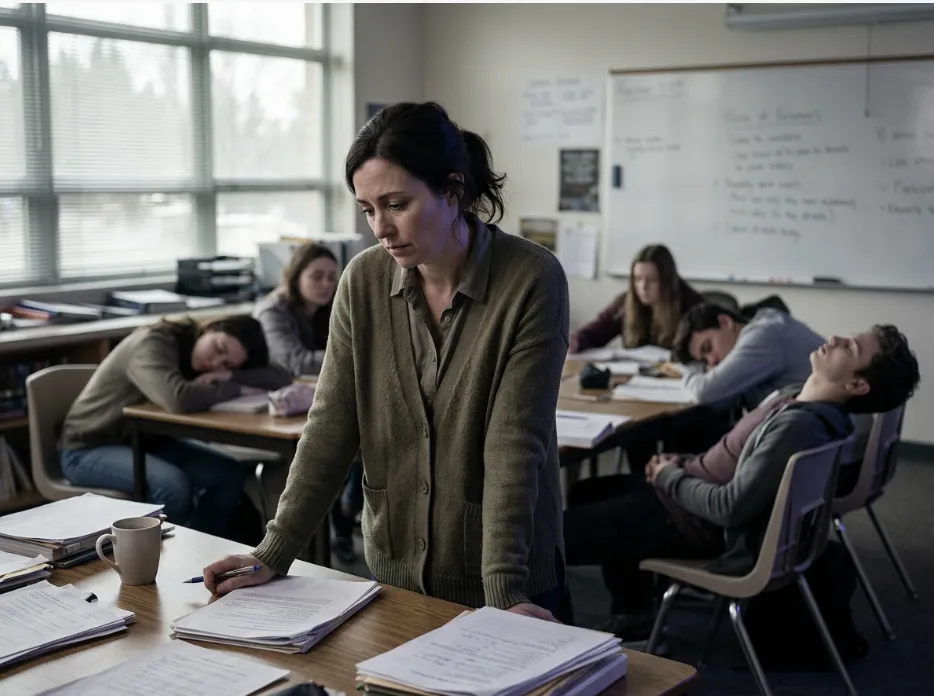
You pour endless hours into thoughtful lesson plans, yet by mid-morning the classroom vibrates with restless kinetic tension. The repeated directions, the fidgeting, the sensory overload of thirty dysregulated nervous systems in one small room. When the 3:00 PM bell rings, you are not simply tired: you feel bone-deep depleted, carrying the physical weight of holding everyone together alone.
What If Tomorrow Looked Completely Different?
From Disconnected To Dialed In
Students Settle with Natural Ease
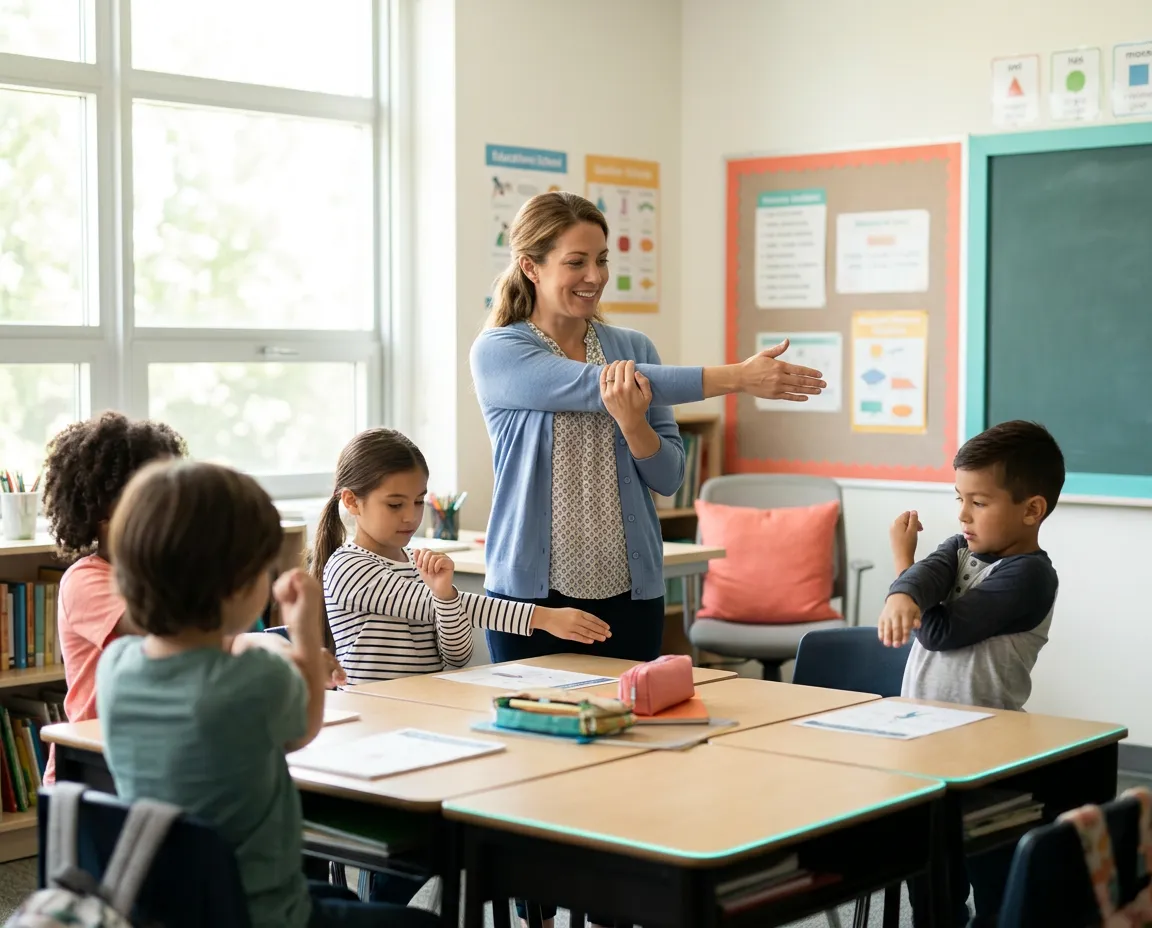
Restlessness yields to calm readiness. Simple physical movements help children self-regulate their internal states without discipline battles or raised voices.
Vitality Left for Your Own Life
Walk out the school door with patience and joy intact. When transitions happen smoothly, your workday no longer drains the personal energy you need for your family and evening.
How movement supports focus, engagement and readiness to learn.
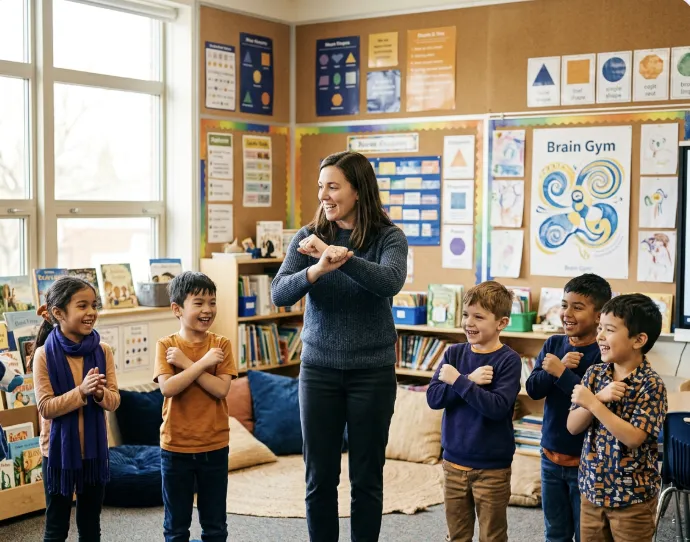
True classroom harmony occurs when movement protocols regulate developing minds and simultaneously protect educator vitality.
The brain-body connection in learning.
FOR STUDENTS
Laser Concentration & Focus
Targeted contralateral movements awaken bilateral brain integration, expanding attention spans and naturally quietening wandering minds before rigorous lessons.
Smooth, Predictable Transitions
Shifting between high-energy recess and focused seatwork becomes a rhythm instead of a struggle, eliminating lost instructional time.
Body Awareness & Self-Regulation
Children discover how physical balance and breath release sensory overload, building lifelong autonomic resilience inside their own bodies.
FOR TEACHERS
Practical Activities for Resettling
Replace repetitive verbal commands and raised voices with precise physical sequences that regain room-wide composure in under 10 minutes.
Personal Stress De-escalation
Participating in simple grounding routines lowers baseline teacher cortisol, bringing authentic emotional equilibrium into high-demand classrooms.
Preserved Teaching Energy
Prevent 3 PM educator fatigue and preserve cognitive stamina by swapping disciplinary friction for effortless, co-regulated group momentum.
Less Time Managing Disruptions, More Time for Learning & Movement for Learning and for Teacher Wellbeing
Brain Gym is an educational movement program using simple physical activities intended to support learning readiness and well-being.
"One of the Most Amazing Tools I Have Used in My Classroom"
"In over twenty years of teaching infants/primary school children, one of the most amazing 'tools' I have used in my classroom has been Brain Gym® exercises.
After introducing daily Brain Gym® exercises, the results have been amazing. Many of the parents have commented how their children are progressing in many different areas including coordination, balance and confidence.
Parents are telling me that their children are much happier and will even do the Brain Gym® exercises at home to help themselves to relax and cope with challenging situations.
Brain Gym® is a simple yet very powerful 'tool' and it can really make a difference in children's learning and behaviour. I would highly recommend it to other teachers and parents."
Primary School Teacher, over 20 years' experience
You'll discover ways to use short movement routines:
Before reading, writing and mathematics lessons.
After morning tea and lunch breaks and during transitions between activities.
When students need an opportunity to move and refocus.
When you, as the teacher, need a brief movement reset.
A few minutes of movement can be a worthwhile investment in the rest of your lesson.
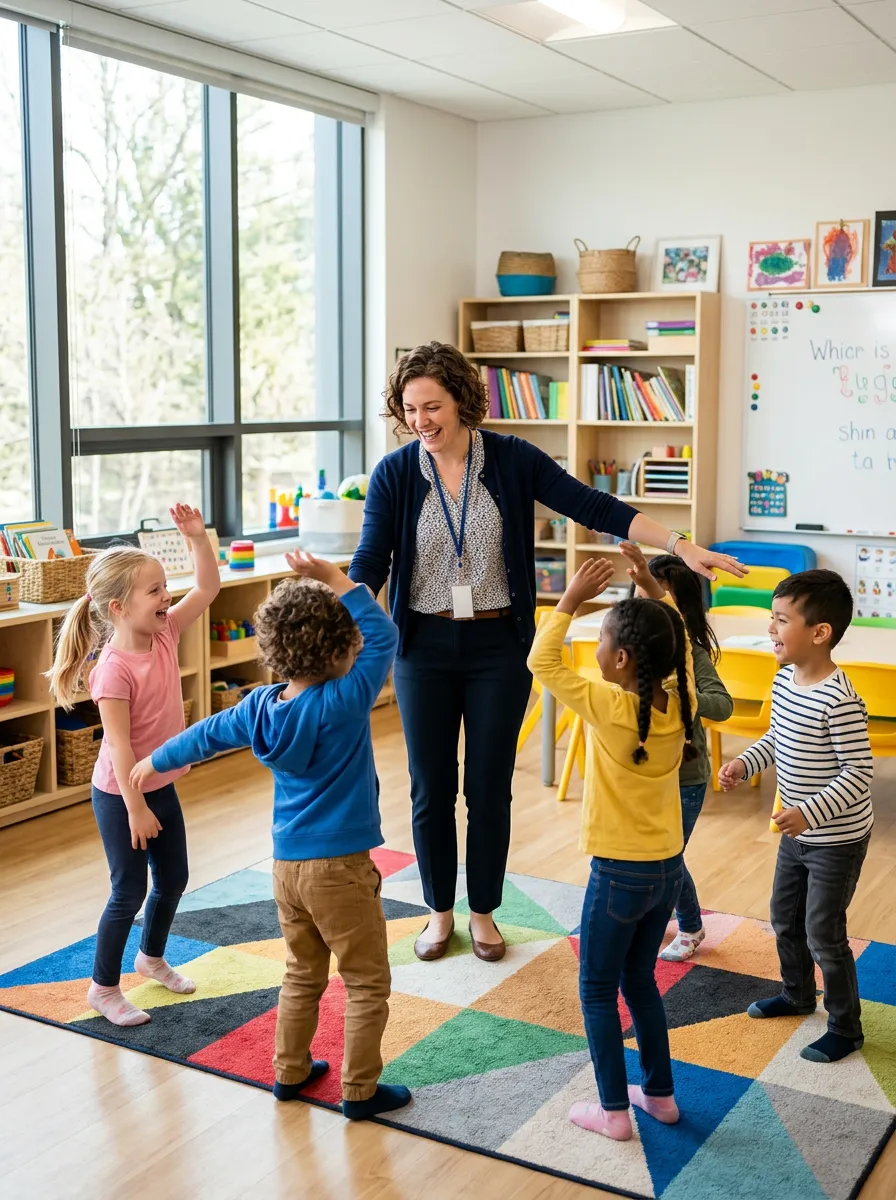
Real Teachers.
Real Transformation.
Amazed educators across grades K–12 share how simple specific movement patterns replaced mid-afternoon fatigue and sensory dysregulation with steady academic focus.
"A Wonderful Investment of Students' and My Time"
"What a wonderful investment of students and my time – a 400% increase in productivity!!
At the end of the day I am energised instead of being physically drained. Students become motivated because they are achieving.
Brain Gym® movements keeps us productive, in a good mood, energised and achieving the task outcomes.
The Brain Gym® program is an essential tool for settling students. It assists them to focus calmly on their work and lessons are more productive.
Students show delight in getting 20 out of 20 for spelling instead of 2 out of 20, and making no mistakes in their reading, excellent recall and fluency."
Sandra, Teacher
"This Program Should Be Part of Teacher Training!"
"The exercises and techniques are so easy to implement in my personal life and in the classroom. This program should be part of teacher training!!!
I have found myself much calmer and more focused in everyday activities.
I am able to stop and quickly refocus my attention and energy on what is important and relevant.
I am so grateful to Enza for her passion and am looking forward to continue integrating my new found skills into more facets of my life, with my family, health and emotional well-being."
Shelly, Teacher
"Even the Music Teacher Noticed the Difference"
Sharynn was teaching a class where students were frequently distracted and finding it difficult to follow instructions.
She had tried many classroom strategies before remembering Brain Gym and enrolling in training.
After introducing daily Brain Gym movement activities into her morning routine, Sharynn reported that students were more attentive and better able to participate in learning.
She also shared that the music teacher had noticed a positive difference in the class.
Sharynn, Teacher
These testimonials describe individual experiences and perceptions. Results vary and are not guarantees of improvements in learning, behaviour, grades or teacher wellbeing.
A Research Study Results
The Moving Classroom: Results of a School District Research Study, Dorothea Beigel, NDT (Germany) During a period six months with fifteen minutes of movement before school
Who was in the Study?
18 eight year old second graders
no prior daily movement activities in the classrooms all had difficulties reading
three randomly assigned groups
three groups received same amount of attention
Three groups consisted of
blue group: big room to play (construction toys, legos, learning games, scooters and movement play
green group: gymnasium using balls, rope, etc.
red group: Brain Gym® movements and repatterning
University students tested all 3 groups once a week for 6 weeks
RESULTS
A double-blind statistical analysis of the data indicated that the children who had done the Brain Gym activities read faster, made fewer mistakes, and had better comprehension of the text material than did the two other comparison groups.
In addition, parent and teacher responses to the questionnaires told us the most of the children in the Brain Gym group gained in their self-confidence and enjoyment of school work and had more success in writing, mathematics, and reading comprehension.
At the end of the study, we wanted to see what would happen when we offered the Brain Gym program to those children who had been in the green and blue groups. We extended the study an additional six weeks, doing the same Brain Gym program with these two groups of children. The results of the second part of the study corresponded to those of the first. We then initiated Brain Gym programs in many schools besides those in our own school district.
REFERENCES: Beigel, Dorothea, Waltraud Steinbauer, and Kurt Zinke. The Moving Classroom: Results of a Research Project with Suggestions for School Implementation. VAK Verlags GmbH, Kirchzarten bei Freiburg, Germany: 2002 (in German)
WORKSHOP CURRICULUM
What You'll Learn
A structured, practical movement program created for real classrooms. Every movement protocol is quick to learn, simple to model, and fits effortlessly into standard instructional blocks... Targeted simple physical exercises and techniques retraining neuro-pathways, bridging the corpus callosum and down-regulating fight-or-flight states to restore academic receptivity.
FOUNDATION
Prepare Students for Active Learning
Master the core P.A.C.E. sequence to gently shift students out of morning lethargy or playground overdrive into a calm, receptive learning state within 3 minutes.
- Drink: Hydration awareness and cellular conductivity prompts
- Brain Buttons: Activating vestibular balance and binocular vision
- Cross Crawl: Bilateral hemisphere integration for reading stamina
- Hook-ups: Nervous system settling for immediate emotional regulation
COGNITIVE ENGAGEMENT
Support Deep Focus & Sustained Attention
Practical physical interventions for moments when fidgeting peaks and working memory fatigues during test-taking, silent reading, or independent seatwork.
Lazy 8s: Strengthening ocular tracking across visual midlines for reading fluency
Thinking Cap: Unrolling ear lobes to stimulate auditory processing and recall
Cross-lateral desk prompts: Discreet 45-second micro-resets between test questions
Adaptive seating balance: Reducing involuntary physical restlessness organically
CLASSROOM RHYTHM
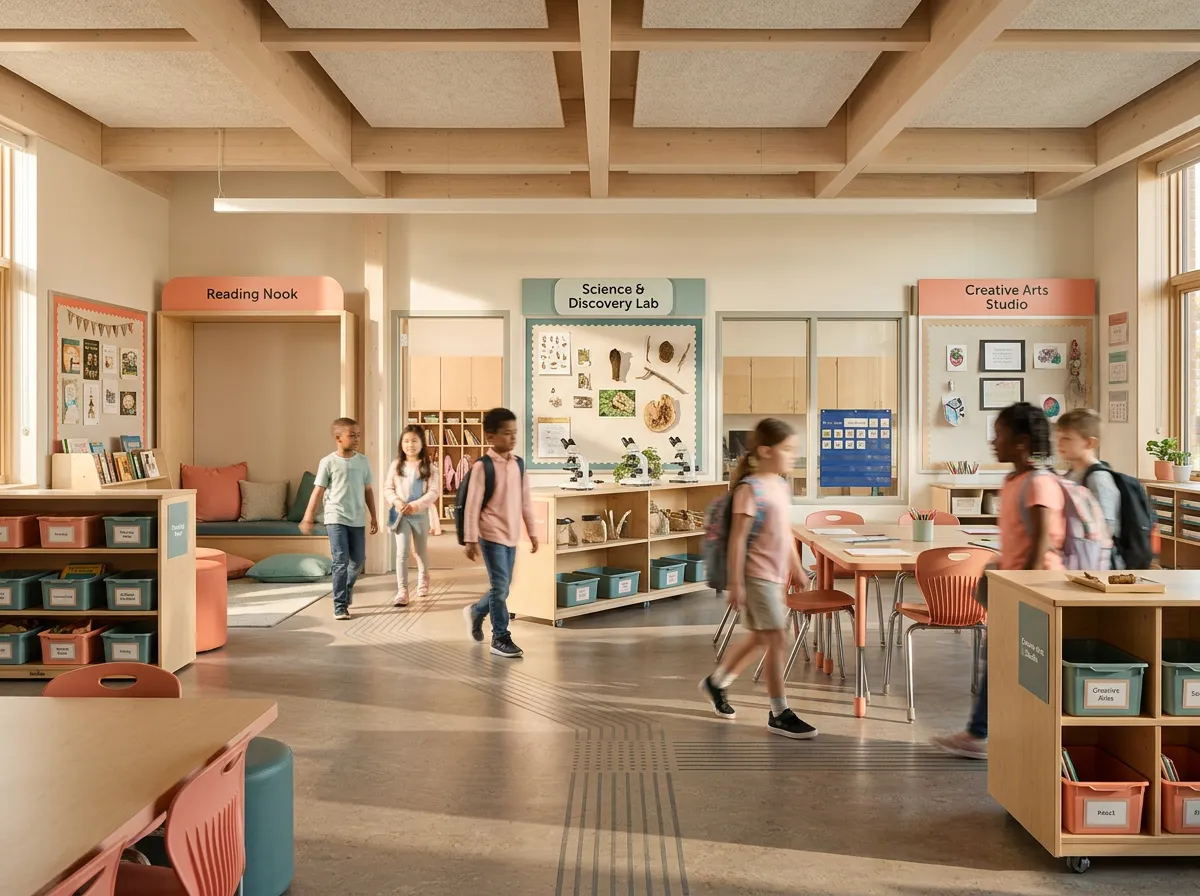
Calmer, Frictionless Transitions
Eliminate chaotic bottlenecks between subjects, after recess, or returning from specials without raising your voice, using rhythmic motor cues that synchronize the whole room.
Post-recess sensory de-escalation: Lengthening movements to discharge adrenaline
Non-verbal shift signals
Hallway line-up stability
Switch-task resets: 60-second bridges between analytical and creative subjects

EDUCATOR RESILIENCE
Teacher Wellbeing & Nervous System Health
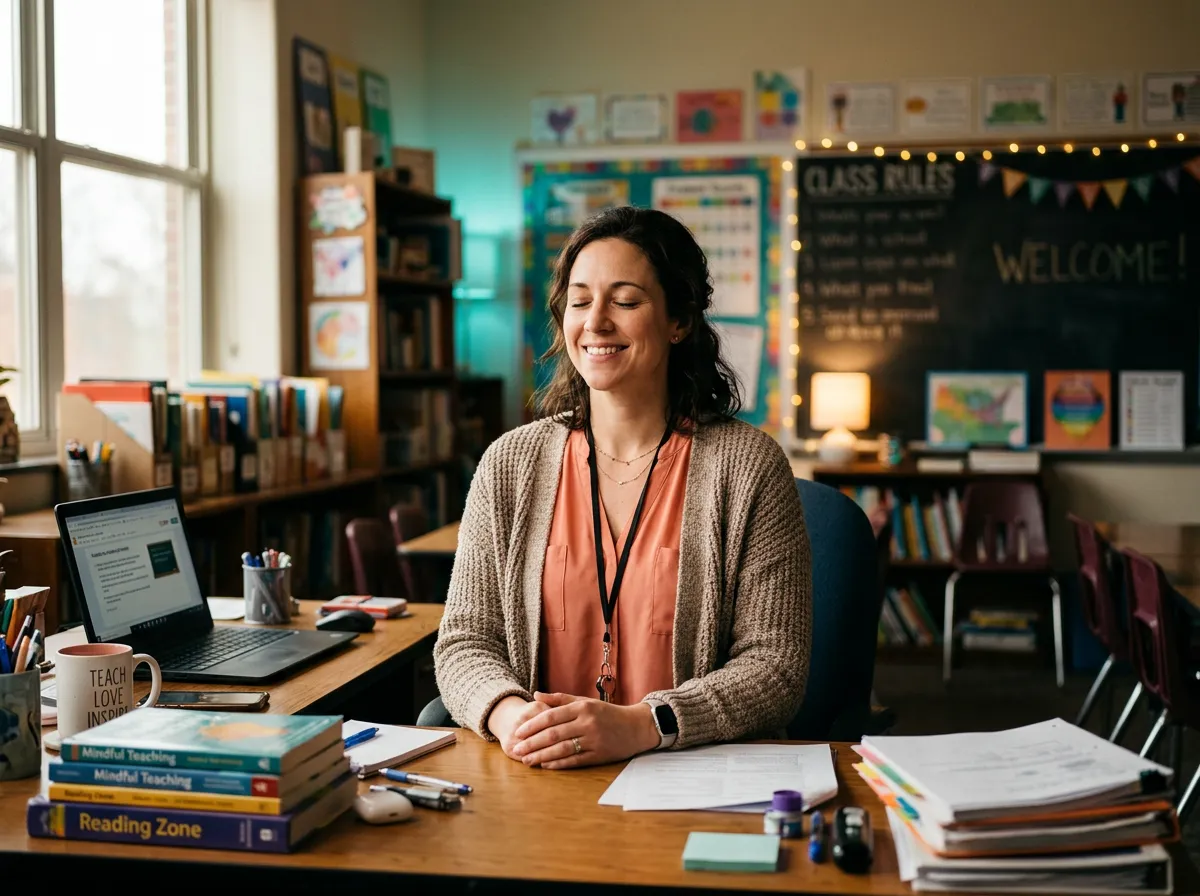
You cannot pour from an empty vessel. Learn rapid somatic self-care tools designed specifically for educators to lower vocal strain, release neck tension, and decompress between classes.
- Vocal cord decompression: Neck release movements that preserve vocal stamina
- Co-regulation sovereignty: Maintaining your grounded calm when student tempers flare
- Post-bell reset: A 2-minute physical unwinding ritual before heading home
- Micro-pauses: Desk-based postural resets that counter fatigue during grading hours
IMPLEMENTATION
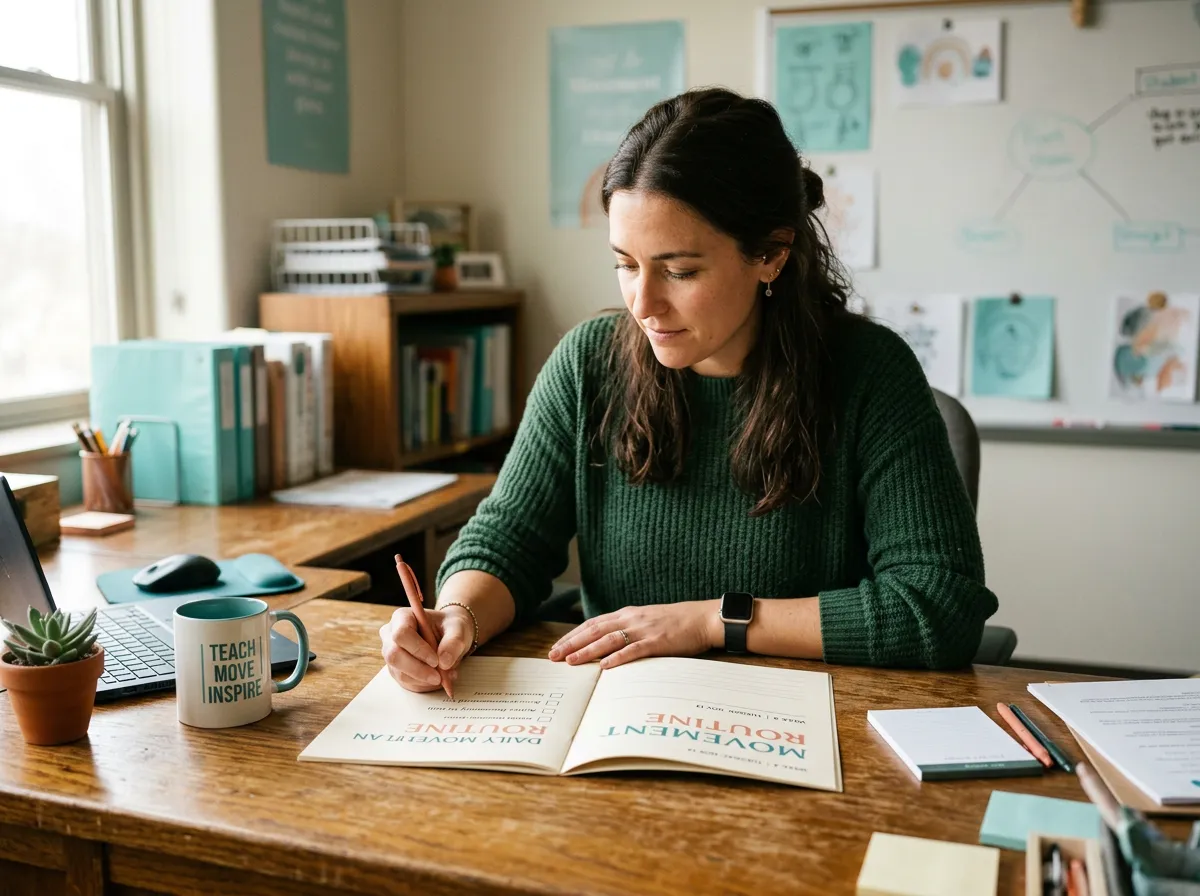
Build Your Personalized 10-15 Minute Routine
Translate theory into a sustainable, repeatable daily routine adapted to your specific grade level, timetable, and room layout without taking precious instructional time.
Custom timetable integration
Classroom posters are available for visual cue. Prompt cards students can follow independently
Special education & neurodivergent adaptations: Modified movements for all sensory profiles
30-day implementation tracker: Practical metrics to observe calmer classroom progress

Ready to Transform Your Classroom Dynamic?
Join hundreds of educators who have replaced classroom friction with calm, focused movement routines.
PROFESSIONAL DEVELOPMENT TIERS
Choose Your Path
Clear training frameworks designed for individual educators and entire school districts seeking sustainable classroom calm.
FOUNDATIONAL SKILLS
Live Online Class
CERTIFICATE OF ATTENENCE- 6 HR
1 Day -Basic Brain Gym Workshop
$350
Group discount (2+ people): $298 pp
A concentrated single-day introduction covering core movement routines to quickly de-escalate stress and refocus student energy.
Complete PACE routine breakdown
Immediate de-escalation strategies
Printable classroom exercise cards
6 hours Continuing Education Hours certificate
Workshop Dates
Monday 4 January, 2027 or
Monday 11 January, 2027 or
Monday 18 January, 2027
MOST POPULAR Live Online class
TRANSFORMATIONAL
CERTIFICATE OF ATTENDENCE 24HR
3 Day - Brain Gym 101 Class Balance for Everyday Living
$980
Group discount (2+ people): $833/pp
Comprehensive mastery of all 26 developmental movements, 5 step step repatterning process and balance for everyday living.
All 26 Brain Gym movements mastered and how it enhances focus, learning and emotional well-being
5 step repatterning process that empowers individuals to overcome challenges, unlock potenital, release anxiety and experience lasting confidence and success.
Targeted movements related to lateral, centering, and focus dimensions
Learn skills to boost reading, writing, comprehension, communication, coordination,
Official course manual and workbook
Re-educate the brain and body to release tense muscles and move with ease
24 hours Continuing Education Hours certificate
Workshop Dates
Sundays 3, 10 & 17 Januray, 2027
or Tues 12, Wed 13 & Thurs 14 January, 2027
Live Online Class-
CERTIFCATE OF ATTENDENCE 16 HR
2 day -
Brain Gym 104
$680
Group discount (2+ people): $578/pp
Dive deep into all 26 Brain Gym activities.
Gain solid understanding of the individual movements
Experience how the exercises enhance learning, balance and stress reduction.
How to implement it in the classroom
Workshop Dates
5 & 6 January, 2027
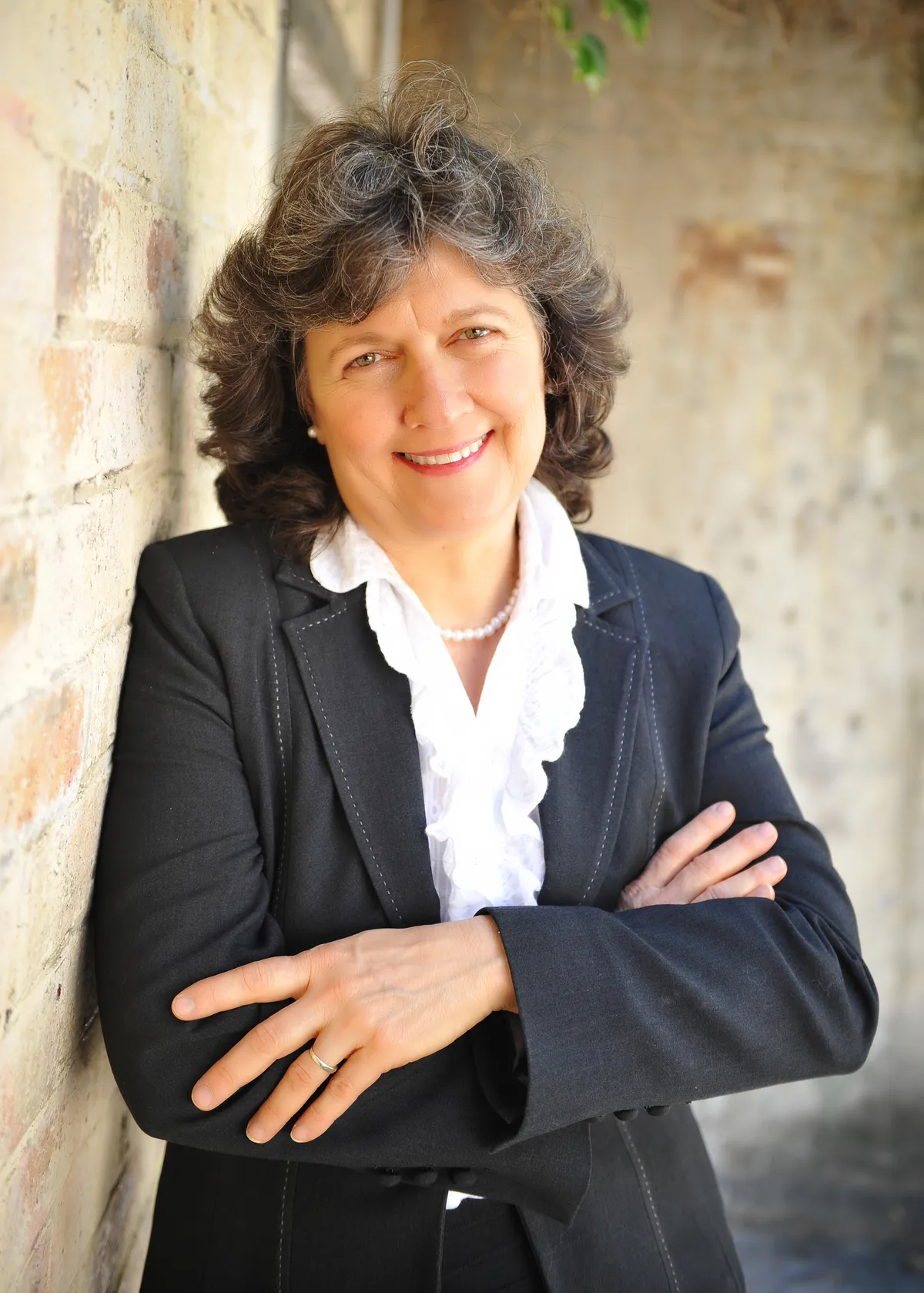
LEARN DIRECTLY FROM THE EXPerienced trainer
Facilitated by Enza Lyons: 35 Years of Educational Supporting Children, Parents & Educators
Hi, I'm Enza,
I've supported children, families, teachers and professionals through approaches to movement, learning, stress and well-being.
For over 35 years, as a Licensed Brain Gym Consultant and Trainer, Registered Kinesiologist, and Brain Body Performance Specialist, I have had the privilege of helping countless individuals overcome challenges, unlock their potential, and achieve goals that once seemed out of reach through the power of Brain Gym.
I've seen how much difference it can make when teachers have activities they feel confident using and children are given opportunities to move, participate and learn. My passion is helping teachers discover practical strategies they can use every day, while also recognising the importance of their own well-being.
Because when teachers feel supported, they are better placed to support their students. I look forward to welcoming you to the workshop.
PROFESSIONAL CLARITY
Your Questions,
Answered
Introducing new pedagogical movement into structured classrooms naturally brings practical considerations. Here are clear answers regarding curriculum alignment, clinical evidence, age suitability, and educator workload.
Have unique district requirements? Personal consultations are always welcome.
Frequently Asked Questions
Is Brain Gym suitable for primary school children?
The movement activities can be adapted for different ages and abilities. Educators should use professional judgement and consider individual student needs.
Do I need previous Brain Gym experience?
No. The introductory workshop is designed for teachers new to Brain Gym. There is no pre-requisite for both Basic Brain Gym, Brain Gym 104 and Brain Gym 101.
Can Brain Gym improve grades and behaviour?
Some teachers have reported improvements in attention, classroom participation, learning and academic results after introducing Brain Gym. These experiences are encouraging. There are clinical studies performed by teachers that have shown improvements.
Can Brain Gym help reduce teacher stress?
Short movement breaks may provide opportunities for relaxation and wellbeing. This workshop includes activities teachers can use personally, yet it is not a substitute for appropriate workplace wellbeing support.
Can our school book a professional development day?
Yes. Contact Enza to discuss your teaching team's needs and available dates.
How do I register?
Select an available workshop date, complete your details and pay securely online. Please contact Enza Lyons if dates do not suit as other dates can be arranged that suit you.
Brain Gym® in the Classroom
Presented by Enza Lyons and Dynamic Learning & Health Centre.
Empowering teachers and students through purposeful, calming, neurological movement.
Direct Contact: Enza Lyons | Centre: Dynamic Learning & Health Centre
Email: [email protected] | Phone: 0413 697 692
https://www.enzalyons.com.au


Professional Disclaimer: Brain Gym® is a registered trademark of Breakthroughs International / Educational Kinesiology Foundation. The classroom activities and developmental movements taught by Dynamic Learning & Health Centre are intended exclusively for educational enrichment, sensory readiness, and focus enhancement. They do not constitute formal medical, clinical psychological, or therapeutic treatment.
© 2026 Brain Gym® Classroom. Presented by Dynamic Learning & Health Centre. All rights reserved.